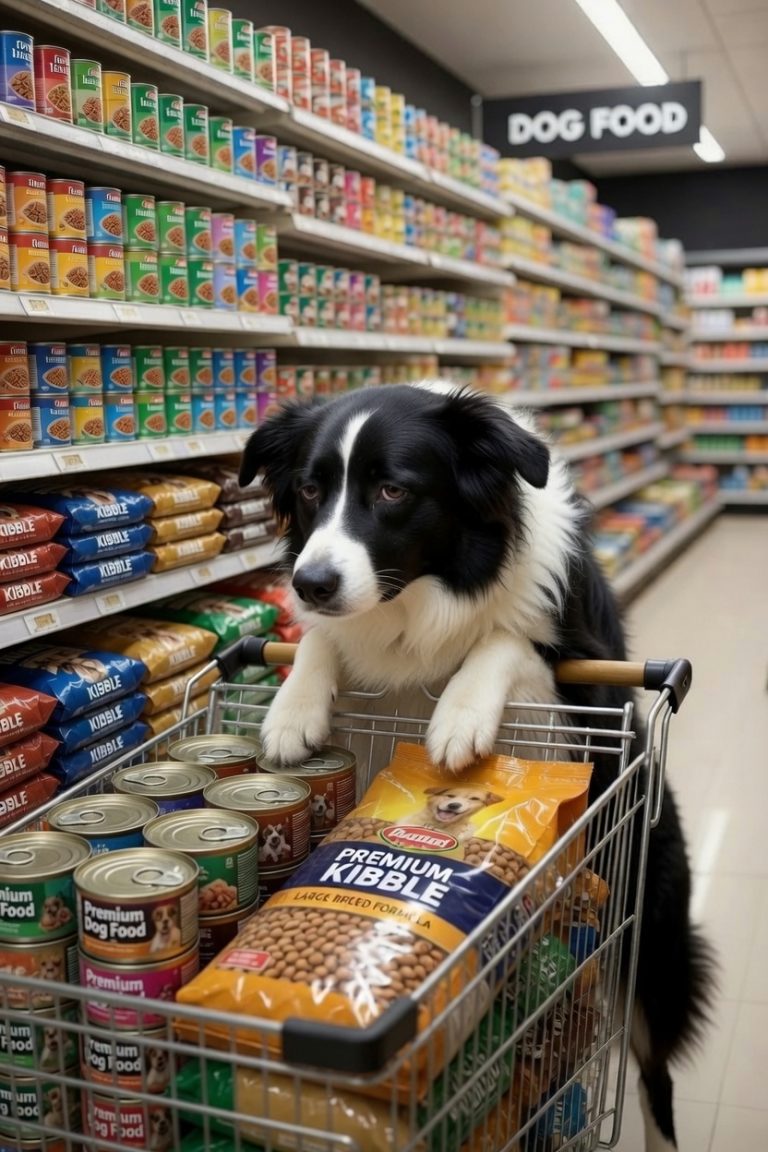

Have you ever stopped to wonder how we got to a point where the default way to feed a dog is to pour dried brown pellets from a bag? It seems so normal now, so convenient, so accepted, that most of us never question it.
But commercial dog food as we know it is a remarkably recent invention. For the vast majority of their history alongside humans, dogs ate something very different. Understanding how we got from there to here tells us a great deal about why so many modern dogs are struggling with their health.
Dogs and humans — A partnership built on real food
Dogs have lived alongside humans for somewhere between 15,000 and 40,000 years, depending on which scientific study you read. For almost all of that time, they ate what humans ate, or more precisely, what humans didn't eat.
Scraps, offal, bones, leftover meat; the parts of the animal that humans had finished with. It wasn't a glamorous diet by modern standards, but it was a biologically appropriate one, rich in raw protein, natural fats, and the nutrients dogs had evolved to thrive on.
Working dogs, hunting dogs, farm dogs, herding dogs, were often fed more deliberately, with raw meat, fish and bones forming the core of their diet. Wealthy families fed their dogs from the kitchen, poorer families shared whatever they had. But across all classes and cultures, one thing remained consistent: dogs ate real, unprocessed food.
This continued, largely unchanged, for thousands of years. Until the mid-nineteenth century.
1860s — The birth of commercial dog food
The commercial dog food industry was born in London in the 1860s, courtesy of an American electrician named James Spratt.
Spratt had travelled to England to sell lightning conductors. The story goes that he noticed stray dogs on the Liverpool dockside eating discarded hardtack biscuits, the tough, long-lasting biscuits that sailors carried on long voyages. Spratt saw an opportunity.
In 1860, he launched "Spratt's Patent Meat Fibrine Dog Cakes", a biscuit made from wheat, beetroot, vegetables and what he claimed was buffalo blood. It was the world's first commercially produced dog food and it was marketed specifically at the British upper classes and their sporting dogs.
It was not designed around canine nutrition, it was designed around profit and convenience; And it was the beginning of a revolution that would change how humans fed their dogs and the health of those dogs, forever.
Early 1900s — The industry grows
Spratt's success inspired imitators, and by the early twentieth century a small but growing commercial pet food industry had emerged, primarily in Britain and the United States.
In 1922, the first canned dog food appeared in the United States, a product called Ken-L Ration, made primarily from horse meat. It was marketed as a convenient, modern alternative to feeding dogs table scraps, and it was enormously successful.
By the late 1920s, canned dog food had become the most popular pet food product in America. The industry had discovered something important: convenience sells. Dog owners, particularly in urban areas, increasingly disconnected from the agricultural traditions of their parents and grandparents — were ready to hand over responsibility for their dog's diet to someone else.
The 1930s — Enter the cereal companies
The Great Depression of the 1930s brought an unexpected twist to the story of commercial dog food. Canned meat was expensive, grain was cheap, and the large American cereal companies like Ralston Purina saw an opportunity.
In 1926, Ralston Purina established its first Dog Care Center, beginning scientific feeding studies that would shape the commercial pet food industry. By 1956, Purina had revolutionised the industry further by launching the first dry kibble made using pressure-processed extrusion technology, a manufacturing process that produced the expanded, shelf-stable pellets we now recognise as kibble. It was cheap to produce, had a long shelf life and could be sold at a significant profit margin. The fact that it bore very little resemblance to anything a dog had ever eaten in its evolutionary history was not, apparently, a concern.
The kibble revolution had begun.
Post-war boom — The golden age of commercial pet food
The post-war economic boom of the 1950s and 1960s created the perfect conditions for the commercial pet food industry to explode. Rising incomes, suburban lifestyles and the increasing influence of advertising, combined to create a generation of dog owners who were told, loudly and repeatedly, that commercial dog food was not just convenient, but scientifically superior to homemade or natural diets.
Vets, influenced by the growing relationships between veterinary schools and pet food companies, began recommending commercial foods. Advertising portrayed kibble and tinned food as the modern, responsible choice. Feeding your dog table scraps, something humans had done for thousands of years, became associated with irresponsibility and poor pet ownership.
It was a masterclass in marketing. And it worked.
By the 1970s, commercial dog food had become the default diet for dogs across the Western world. The idea of feeding a dog raw meat, bones, and vegetables, the diet dogs had thrived on for millennia, had become fringe, eccentric, even dangerous in the public imagination.
The late 20th century — Bigger, more processed, more profitable
As the decades passed, the commercial pet food industry grew into a multi-billion pound global business and the products it sold became increasingly processed, increasingly reliant on cheap ingredients and increasingly distant from anything resembling real food.
Meat derivatives replaced quality meat. Grains and starches bulked out products at minimal cost. Artificial preservatives extended shelf lives to months or years. Synthetic vitamins and minerals were added back in to compensate for the nutrients destroyed in processing.
And all of it was wrapped in increasingly sophisticated marketing; "balanced", "natural", "premium", "scientifically formulated". Language designed to reassure dog owners that they were doing the right thing, while obscuring what was actually inside the packet.
The 21st century — The raw feeding revival
The good news is that the tide is beginning to turn.
Over the past two decades, a growing movement of dog owners, nutritionists, and holistic vets has begun questioning the commercial dog food orthodoxy and returning to the principles of biologically appropriate raw feeding that served dogs so well for thousands of years before Spratt's biscuits arrived on the scene.
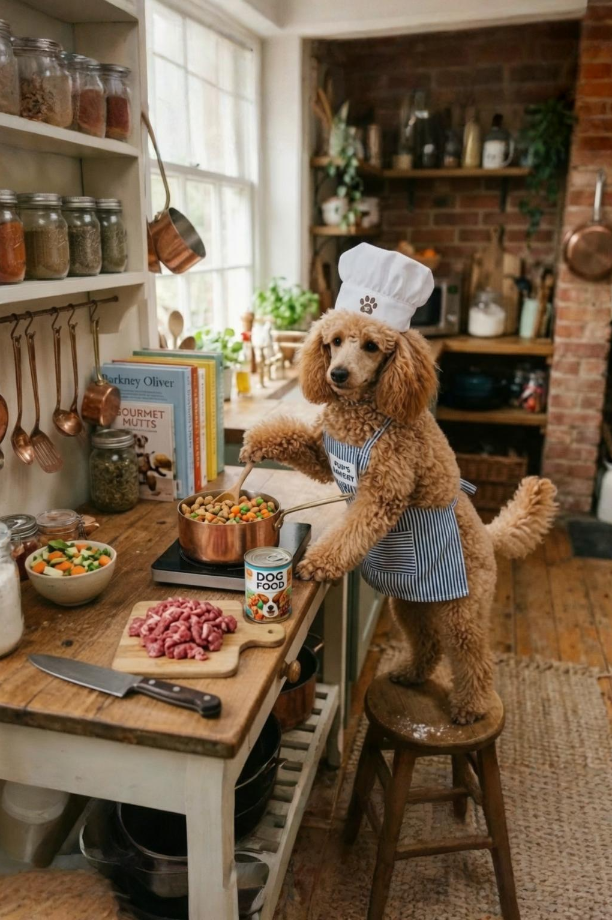
The BARF diet — Biologically Appropriate Raw Food — is at the forefront of this revival. It is not a new idea. It is, in many ways, the oldest idea in the world when it comes to feeding dogs. It is simply a return to what dogs evolved to eat, approached with the knowledge and understanding that modern nutritional science makes possible.
The commercial pet food industry would have you believe that feeding your dog raw food is risky, complicated and irresponsible. But consider the source of that message and consider that for the vast majority of the 15,000 to 40,000 years that dogs have lived alongside humans, nobody needed a factory to tell them how to feed their dog.
The bottom line
Commercial dog food is not a nutritional breakthrough. It is a commercial product, born out of a combination of convenience, clever marketing and the profit motive, and it is less than 200 years old.
Dogs, on the other hand, have been thriving on raw, natural food for tens of thousands of years.
The history of commercial dog food is the history of how we were gradually persuaded to forget something we once knew instinctively, that real food, in its natural state, is what living creatures were designed to eat.
It's not too late to remember.
Ready to return to the diet nature intended for your dog? Book a consultation with me and let's create a personalised BARF feeding plan for your dog — because some things are better the old way.
Ellie Kelland is the UK's first certified BARF dog nutritionist, a qualified animal naturopath and a veterinary science graduate. She founded BARF time to help dog owners give their pets the diet nature intended.
Other reads you might find interesting...