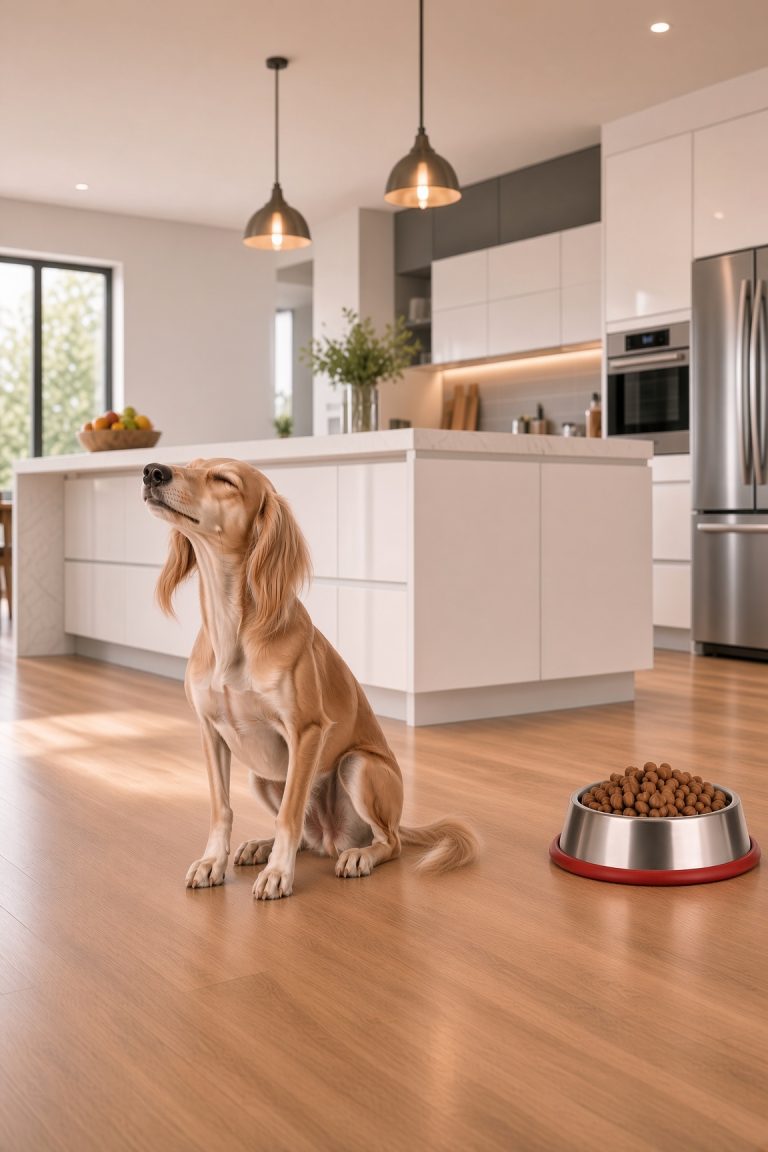
We've all been there. You put the bowl down, your dog sniffs it, looks up at you with those eyes and walks away. Or they eat half of it unenthusiastically and leave the rest. Or they'll only eat if you stand next to them, add something on top or practically beg them to try it.
The standard advice? "It will eat when it's hungry enough", or worse, "it's just being spoilt".
But what if your dog isn't being fussy at all? What if it's actually being remarkably sensible?
Dogs have remarkable instincts
A dog's sense of smell is estimated to be between 10,000 and 100,000 times more powerful than ours. They can detect individual ingredients, chemical compounds, and even the absence of nutrients in their food at a level we cannot begin to comprehend.
In the wild, canines use this extraordinary sense of smell to assess whether food is safe, nutritious and appropriate for them to eat. That instinct doesn't disappear just because we put their dinner in a stainless steel bowl.
When a dog refuses food, turns its nose up or eats reluctantly, it may simply be telling us, in the only way it can, that something isn't right.
What might they be detecting?
There are several things a dog's nose might be picking up that their owner can't:
Rancid fats — kibble contains fats that can go rancid over time, particularly once the bag is opened and exposed to air. The smell may not be obvious to us, but to a dog it can be deeply off-putting.
Artificial flavourings — ironically, the artificial flavour enhancers added to commercial dog food to make it palatable can actually put some dogs off. Their noses detect the artificiality of it even when we can't.
Nutritional inadequacy — there is growing evidence that animals have an innate ability to detect nutritional imbalances in their food. A dog that consistently refuses or shows little enthusiasm for their food may be instinctively aware that it isn't meeting their nutritional needs.
Mould and contamination — dry kibble stored in warm or humid conditions can develop mould that is invisible to the human eye but detectable to a dog.
But what about dogs that are fussy with raw too?
It's a fair question and the answer is usually one of two things.
Firstly, a dog that has been eating heavily flavoured commercial food for a long time may need time to adjust to the more subtle, natural taste of raw food. Their palate and their gut has adapted to processed food, and the transition can take patience.
Secondly, some dogs are genuinely sensitive to certain proteins or ingredients, even in raw food. A dog that consistently refuses a particular protein may be telling you something important about what works for their individual digestive system.
This is one of the many reasons why a personalised approach to raw feeding matters so much. A one-size-fits-all raw diet is better than kibble, but a diet tailored specifically to your dog's preferences, sensitivities, and nutritional needs is better still.
What should you do with a fussy dog?
Start by taking their reluctance seriously rather than dismissing it. Ask yourself:
● How old is the bag or tin of food? Has it been stored correctly?
● Has your dog always been fussy, or is this a recent change? A sudden loss of appetite can signal a health issue worth investigating.
● Are they fussy about everything, or just certain foods? Selective fussiness is often more telling than general reluctance.
● Are there any other signs of digestive discomfort, loose stools, flatulence, or a bloated belly after eating?
And most importantly, consider whether their food might simply not be right for them. Not in terms of brand or flavour, but fundamentally, biologically.
The dog that won't eat kibble might just be right
It takes courage to admit that our dog might know better than we do. But think about it logically; dogs evolved over thousands of years eating raw meat, organs, and bones. A highly processed, carbohydrate-heavy pellet is about as far from that as you can get. Perhaps the dog that refuses it isn't being difficult. Perhaps they're simply the one whose instincts are still closest to nature.
Is your dog a reluctant or fussy eater? It might be time to listen to what they're telling you. Book a consultation with me and let's find a diet your dog will genuinely thrive on, not just tolerate.
Ellie Kelland is the UK's first certified BARF raw food dog nutritionist, a qualified animal naturopath and a veterinary science graduate. She founded BARF time to help dog owners give their pets the diet nature intended.
Other reads you might find interesting...